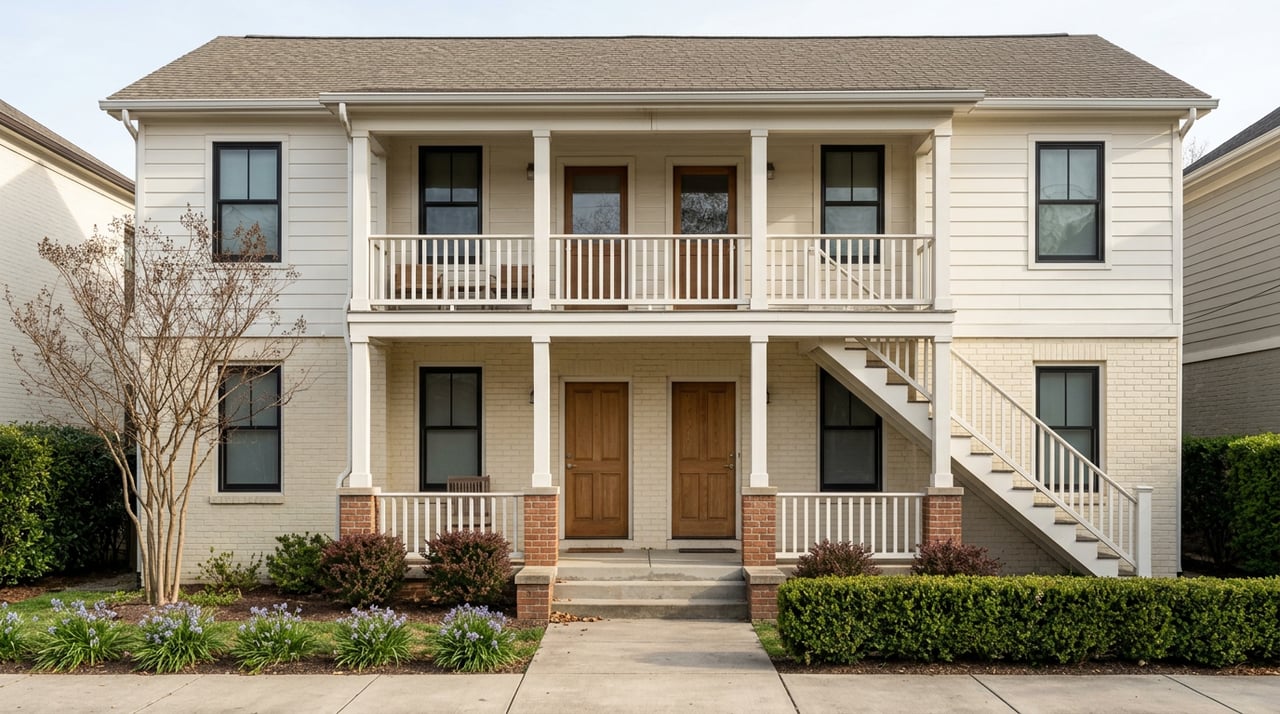
Pull up three duplex listings in Milwaukee right now and you'll likely see the same number staring back at you from each one: a cap rate somewhere between 7 and 9 percent. One is in Riverwest. One is in Bay View. One is in Walker's Point. On paper, they read as interchangeable. An investor comparing them side by side could reasonably conclude the choice comes down to preference: brick versus siding, a finished basement versus not, which block feels right.
That conclusion would be wrong, and not because any of the listings are lying. The cap rate they're quoting is real. It's just incomplete in a way that matters more in Milwaukee than in most cities an out-of-state investor might be comparing it against.
The Same Range Shows Up Everywhere You Look
As of March 2026, duplexes in Bay View, Riverwest, and Walker's Point were trading in the $150,000 to $220,000 range, with combined monthly rents of $1,800 to $2,400 and advertised cap rates of 7 to 9 percent. That range doesn't stay contained to those three neighborhoods, either. Larger buildings in the North Shore suburban submarket trade at cap rates between 6 and 9 percent, depending on size and exact location. Properties near Marquette University, where student demand keeps turnover fast, tend to sell in the same 8 to 9 percent band. Downtown and East Side buildings, sitting in the most demand-constrained part of the city, still land in a 7 to 9 percent range.
When the same headline number shows up across a downtown high-demand submarket, a student-housing pocket, and a walkable near-east neighborhood known for breweries and the Riverwest 24 bike race, that number has stopped doing the job an investor actually needs it to do. A cap rate that wide, repeated that consistently, is telling you less about the deal and more about how the deal was calculated.
| Submarket | Typical Cap Rate | Notes |
|---|---|---|
| Riverwest, Bay View, Walker's Point (duplex, $150K-$220K) | 7-9% | Combined rent $1,800-$2,400/mo |
| North Shore / suburban (larger buildings, 16+ units) | 6-9% | Rarely reach the market |
| Near Marquette University | 8-9% | Sells fast, student-driven demand |
| Downtown / East Side | 7-9% | Low vacancy, rent at a premium |
The Line the Flyer Doesn't Itemize
Here's what the range hides. Wisconsin's property tax rate sits at roughly 2.2 percent of assessed value, among the highest effective rates in the country for residential investment property. On a $170,000 duplex, a fairly typical price point in this segment as of early 2026, that works out to something close to $3,740 a year before a single repair, insurance premium, or vacancy day gets factored in.
That number by itself isn't a red flag. Every state taxes property, and every investor building a proforma should already have a tax line. The issue is what happens when you compare a Milwaukee duplex against a similarly priced deal somewhere with a lower burden. A duplex in Cleveland at a comparable price point carries a property tax rate closer to 2.0 percent, and Cleveland's market frequently posts cap rates in the 9 to 11 percent range on comparable product. Put those two facts together and the spread between "Milwaukee at 7-9 percent" and "a 9-11 percent market with a slightly lower tax bite" is larger than the headline cap rates alone suggest. The tax line is doing more work against the Milwaukee deal than the sticker cap rate lets you see.
Wisconsin's property tax rate is regularly cited as the single biggest drag on Milwaukee duplex cash flow, capable of turning a deal that looks strong before taxes into one that's merely adequate after them.
This is the piece that gets lost when someone screens deals by cap rate alone. Two duplexes with the same advertised return can produce meaningfully different after-tax cash flow if one carries a heavier assessed value relative to its rent roll. The fix isn't complicated. It's running the actual annual tax bill, not an assumed expense ratio, before comparing a Milwaukee number against a number from another market.
What Milwaukee Renters Do That the Cap Rate Doesn't Charge For
There's a second variable working in the opposite direction, and it's just as absent from the headline number.
Most cap rate math assumes a certain amount of turnover. Every time a unit sits vacant between tenants, every time a landlord offers a month free to fill a unit fast, that erodes the effective yield the property actually delivers over a multi-year hold. Milwaukee's tenants behave differently than the national average on this front, and the difference is large enough to matter.
According to Marcus & Millichap's second-quarter 2026 Milwaukee multifamily report, renewal conversion rates in the metro are running near 71 percent, well above the national average of 56 percent. Concessions are being offered on only about 8.5 percent of Milwaukee apartments, compared to roughly 17 percent nationally. The same report forecasts vacancy declining to 3.9 percent and effective rents rising 2.5 percent to $1,715 by the end of 2026, with multifamily transaction volume in the metro climbing nearly 35 percent in the twelve months ending in March 2026, the strongest annual increase the market has posted in recent memory.
None of those figures show up in a duplex's advertised cap rate, because the cap rate is a snapshot calculation, not a multi-year model. But a duplex operator who plugs a generic 25 to 30 percent national turnover assumption into their proforma is understating how much rent a Milwaukee property is actually likely to collect over three or five years. Lower turnover means fewer vacant months, fewer make-ready costs, fewer concessions, and fewer leasing fees. That's real money the cap rate never mentions, sitting on the other side of the ledger from the property tax drag.
The Rule That Turns a Rehab Into a City Inspection
There's a third piece of friction that matters specifically to anyone buying a Milwaukee duplex with renovation in mind, and it has nothing to do with yield math.
Milwaukee's Vacant Building Registration ordinance requires the owner of any building vacant for more than 30 days to register the property with the city's Department of Neighborhood Services and submit to a mandatory interior inspection, according to a summary from Pettit Law Group, a Wisconsin landlord-tenant law firm. The ordinance exists to keep vacant buildings from deteriorating, and the logic behind it is reasonable. But it also means that a value-add investor planning to hold a unit vacant for six or eight weeks of renovation between tenants can trigger a city inspection they didn't budget for, along with the timeline and compliance cost that comes with it.
This friction lands differently depending on strategy and submarket. A buy-and-hold investor targeting a North Shore building that rarely turns over won't feel it. Someone running a faster value-add play near Marquette or in Riverwest, where properties are more likely to change hands and get rehabbed between tenants, needs to build the 30-day clock into their renovation schedule from day one.
Building the Number That Actually Matters
None of this means the advertised cap rate is useless. It means it's a starting point, not a conclusion. Before comparing a Milwaukee duplex against a deal in another city, or even against a different Milwaukee submarket, it's worth running three adjustments the listing sheet won't run for you.
First, replace the assumed tax expense with the actual annual bill at the property's assessed value, not a percentage estimate. Second, model turnover using Milwaukee-specific renewal behavior rather than a generic national assumption, since a 71 percent renewal rate changes the vacancy loss line meaningfully over a multi-year hold. Third, if the strategy involves any stretch of vacancy for renovation, price in the 30-day registration and inspection requirement as a real cost, not a footnote.
Run those three adjustments and the 7 to 9 percent range that shows up across Riverwest, Bay View, Walker's Point, and half the city's other submarkets stops looking like one number. It starts looking like several different deals wearing the same label.
A Few Questions We Hear From Investors
Does the 2.2 percent property tax rate apply the same way across every Milwaukee neighborhood? The rate itself is set at the municipal and county level and applies broadly, but the dollar amount you pay depends on the property's assessed value, so two duplexes with identical advertised cap rates can carry different actual tax bills if their assessments differ.
Does the Vacant Building Registration ordinance apply if I'm renovating between tenants rather than leaving a building fully empty? The ordinance is triggered by the building sitting vacant for more than 30 consecutive days, regardless of whether the vacancy is due to a slow renovation, a tenant search, or something else. Anyone planning renovation work that could stretch past a month should plan for registration and an interior inspection as part of the timeline.
Is a higher cap rate always the better Milwaukee deal? Not on its own. A higher cap rate can reflect a genuinely better return, or it can reflect higher assessed value relative to rent, a rougher renovation history, or a submarket with less renter stability. The number is a starting filter, not a final answer.
If you're weighing a Milwaukee multifamily purchase against a Chicago or Madison alternative, or trying to figure out which submarket actually fits your hold strategy, that's the kind of comparison our team runs for clients regularly. Phair-Hinton Group works both sides of this market every week. Let's get you home, schedule a call to get started.