Pull up three real estate sites and search "Riverwest median home price" this month, and you will get three different answers that do not agree with each other by tens of thousands of dollars. One neighborhood guide published in early April put the number around $210,000. A national home-value tracker updated April 30 put it at $279,399. A sold-price tracker showed $309,896 as of May, while a separate page from that same tracker showed $350,000 as of a different month, down 4.2 percent from the year before.
That is not four sources disagreeing about the same fact. It is four sources measuring four different things and calling all of them "Riverwest."
If you are comparing Riverwest to Milwaukee's East Side and Brady Street corridor before deciding where to make an offer, this matters more than it looks like it should. The gap between these numbers is not noise to average out. It is the answer to a question you have not asked yet: what, exactly, is being counted when someone hands you a median?
Same Two Words, Different Baskets of Houses
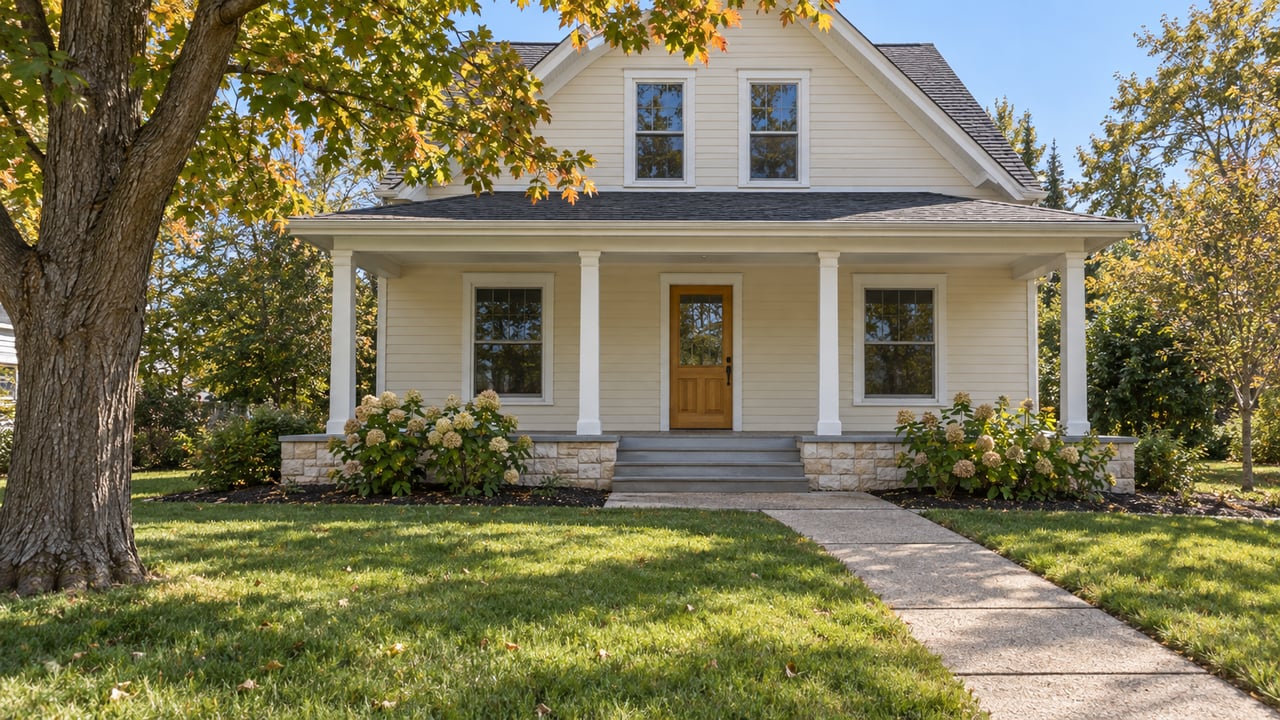
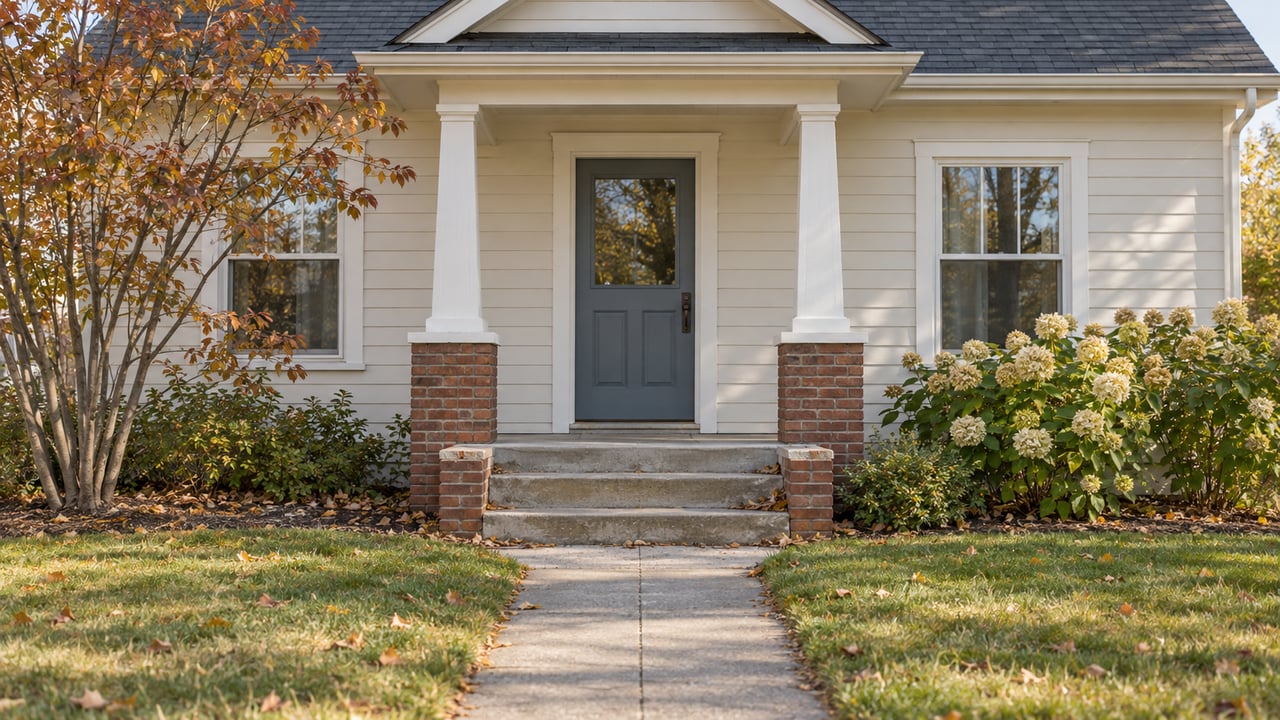
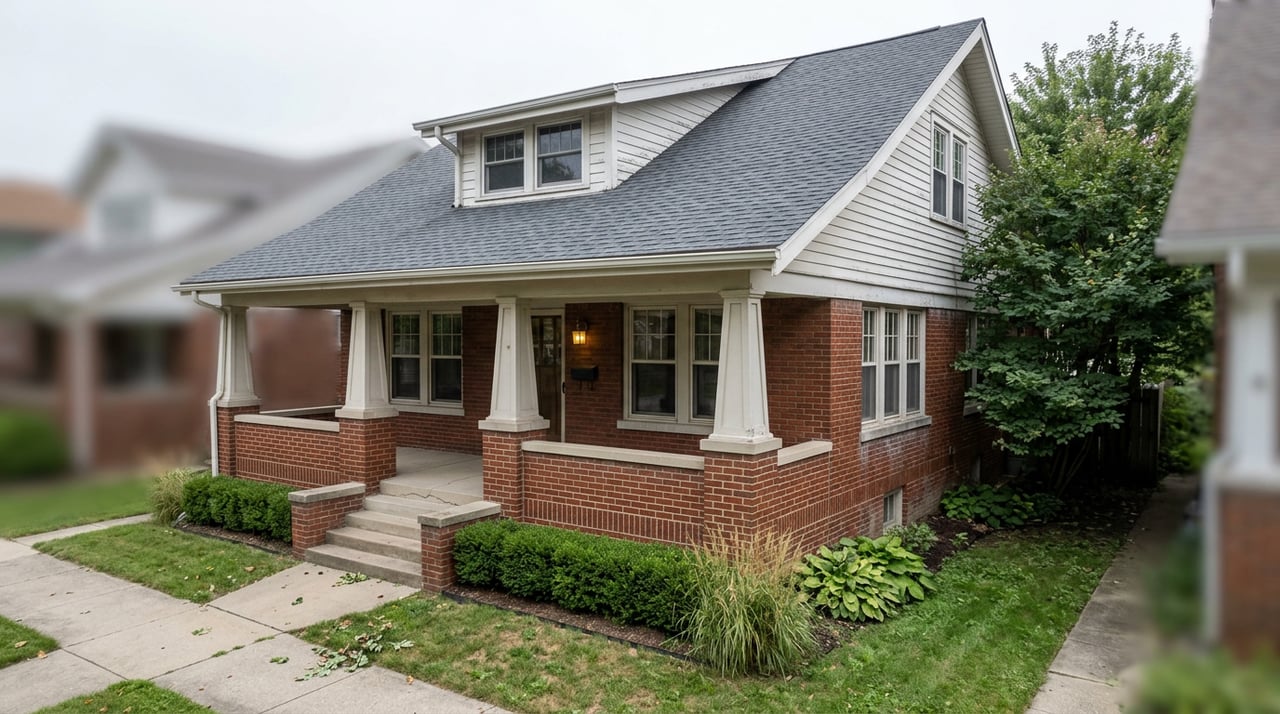
Riverwest's housing stock is dominated by duplexes, bungalows, small cottages, and a distinctive local form called the Polish flat, a house with a basement apartment added after the original build, often to house an expanding family or bring in rental income. That stock ranges from entry-level properties near $110,000 up to premium renovated properties above $400,000, according to a neighborhood guide published in April 2026.
A median calculated from a month heavy on entry-level duplex sales looks nothing like a median calculated from a month with a few premium renovated Polish flats mixed in. Change the mix of what sold, and the median moves by tens of thousands of dollars without a single home in the neighborhood actually changing in value. That is most of the spread between $210,000 and $350,000 right there. It is not four platforms lying to you. It is four platforms sampling different weeks from a small, architecturally varied inventory and calling the result a neighborhood price.
The East Side splits even further, because "East Side" is doing even less precise work as a label. A homes.com neighborhood page tracking the Lower East Side put the median sale price at $329,450 as of March 2026, with the average slightly higher at $353,801 and condos on the market ranging from $119,500 to $575,000. A different cut of the market, labeled "Upper East Side," showed a median sale price of $588,000 as of March 2026, up 24.1 percent year over year.
A 24 percent jump in a single quarter is not a market trend. It is a small sample getting pulled around by a handful of high-end closings. When a neighborhood boundary only captures a few blocks and a few dozen sales in a given window, one $700,000 condo closing can move the median by tens of thousands of dollars on its own.
What's Actually Different Between the Two
None of this means Riverwest and the East Side are the same place with different labels. They are genuinely different products, and the difference is worth understanding on its own terms, separate from whatever median happens to be quoted this month.
Riverwest's commercial spine runs along Center, Locust, and Burleigh streets, and the character of the neighborhood is built on things that do not change ownership structure overnight: the Riverwest Co-op grocery, the Polish Falcon bowling alley, and four neighborhood breweries in Lakefront, Black Husky, Amorphic, and Gathering Place. The Riverwest 24, an all-night bike race run on the last full weekend of July along a suggested 4.6-mile loop, has become the kind of civic institution that tells you a neighborhood's business turnover happens inside an existing building stock rather than through new construction.
That turnover is still happening. On April 14, 2026, Milwaukee Day, a new business called Diaspora Sports Bar and Lounge opened at 735 E. Center St., the former home of Company Brewing. Getting there took months. The ownership group first proposed the bar in September 2025 with a different partner structure, one that included an employee of the Milwaukee Police Department, which raised conflict-of-interest concerns at the city's Licenses Committee. The group restructured, removed that partner, and ran into a second problem when the new registered agent turned out to have been a partner in Flame 13, a bar the city had shuttered. They restructured again, and the council finally approved the license in late March, clearing the way for an April 14 grand opening timed to the city's own unofficial holiday.
That is a small business fighting through Milwaukee's licensing process to open in an existing storefront. It is a useful contrast to what "new supply" looks like across the river on the East Side, where the story runs through developers and zoning applications rather than a single storefront. Wangard Partners announced a condominium project called Brady & Water at 1701 N. Water St., where Brady Street meets Water Street, planned in three phases with up to 250 units total and a first phase of up to 70 units, designed by RINKA architects with boat slips and riverfront green space. A separate proposal for an 11-story hotel at Farwell and Brady was rezoned by the Common Council back in 2023, and the two-story building on that site was demolished in late 2024 to clear the way for it.
As of the most recent construction reporting, from March 2026, that Farwell Avenue lot is still vacant, used in part as a parking lot, with the development team not responding to requests for an update. It is one of several major Milwaukee projects that received city approval years ago and have since stalled on rising interest rates and construction costs, alongside a downtown office-to-apartment conversion whose estimated cost climbed from $165 million to $186 million since summer 2025. The last condominium project to actually receive zoning approval in the city, a townhome development called The Fifteens at Park East, was approved in 2024 and canceled in 2025.
That gap between announcement and delivery matters if you are pricing the East Side against Riverwest. Some of what makes the East Side's higher-end numbers look the way they do is priced-in anticipation of new product that has not consistently arrived on schedule. Riverwest's numbers, by contrast, are almost entirely a reflection of existing stock changing hands, which is part of why its spread across platforms is really about sampling and property mix rather than a story about undelivered supply.
What This Means If You're Actually Comparing the Two
If you are deciding between these neighborhoods, the headline median on either side is close to useless on its own. What is useful is asking three more specific questions before you let any number anchor your expectations:
- Is this a list price, a sale price, or an index estimate built from a model, and over what window was it calculated?
- What property types are actually included, since a duplex, a Polish flat, and a new-build condo do not belong in the same average even when they sit on the same block?
- How many transactions is this median actually built from, since a boundary that only captures a few dozen sales a quarter will swing on a single high-end closing?
A buyer cross-shopping a Riverwest bungalow against an East Side condo is not really comparing two neighborhood medians. They are comparing two different products in two different parts of the housing stock, one grounded in a century-old building form that turns over slowly, the other tied to a development pipeline that has been running behind its own announcements. Knowing which one you are actually looking at, corridor by corridor and property type by property type, tells you more than any single number a website hands you.
A Couple of Questions We Hear on This One
Why does the same platform sometimes show two different numbers for the same neighborhood? Most listing platforms let you view data cut by sale price, list price, or a modeled index, and by different rolling time windows. Those are legitimately different calculations, not errors, but they rarely match each other, especially in a neighborhood with a small number of monthly transactions.
Is Riverwest actually cheaper than the East Side, or does it just look that way? On the whole, yes, Riverwest's existing housing stock trades at lower price points than East Side condo product, largely because of what each area's inventory is built from. But the size of that gap depends entirely on which slice of each market you are comparing, so treat any single headline figure as a starting point for questions, not a final answer.
Comparing neighborhoods on a headline number is how buyers end up anchored to a figure that has little to do with the specific house they eventually make an offer on. If you are trying to figure out what a Riverwest duplex or an East Side condo actually costs once you account for property type, condition, and which blocks you are really considering, that is a conversation worth having before you start touring. The Phair-Hinton Group works both sides of this market every week. Let's get you home, schedule a call to get started.