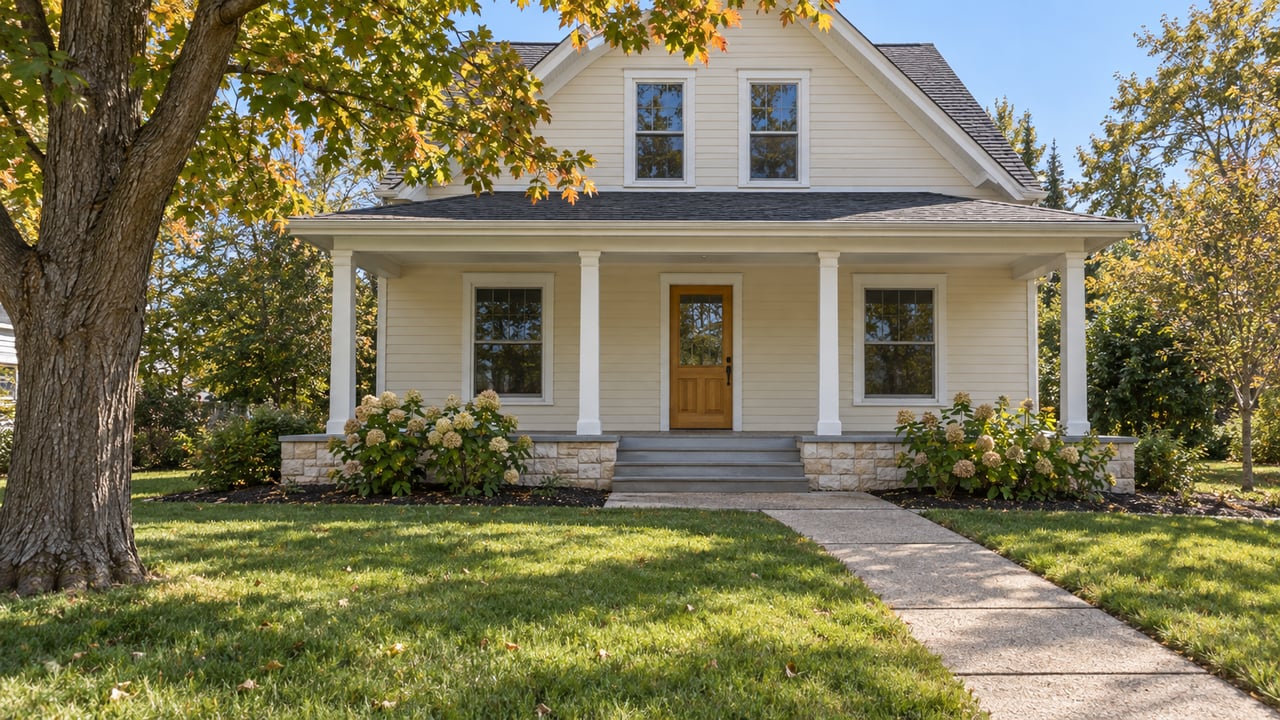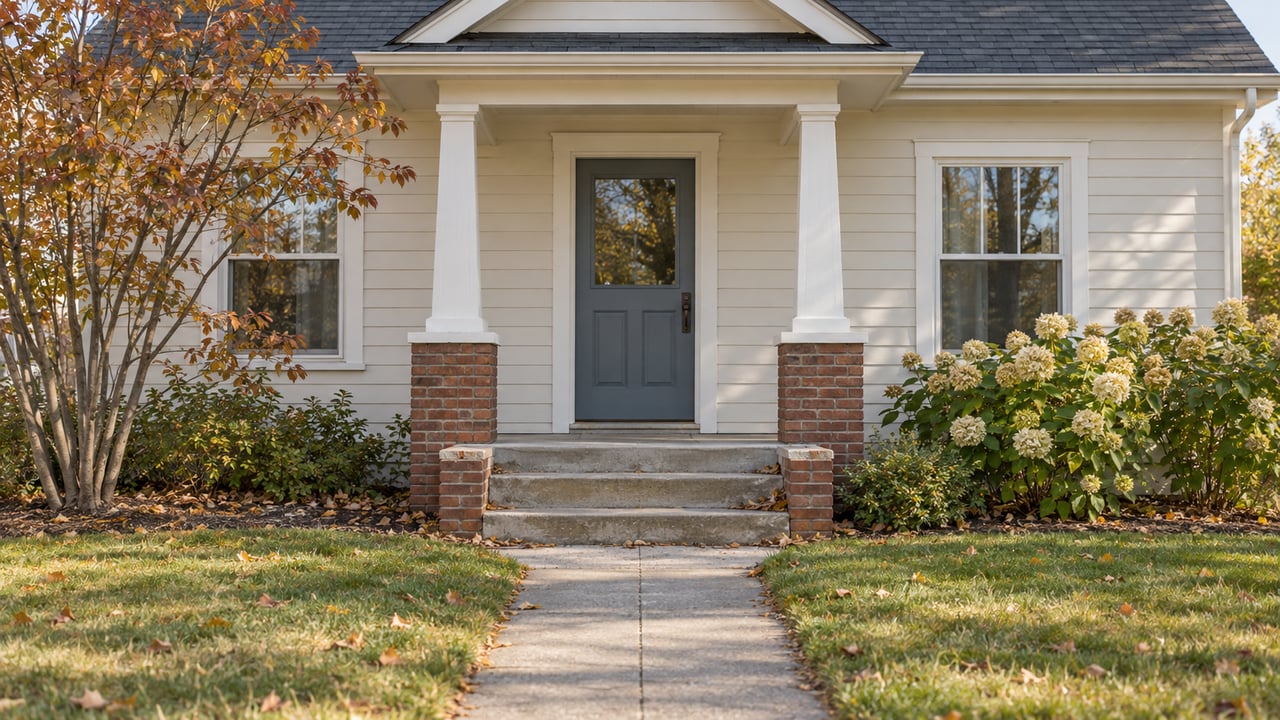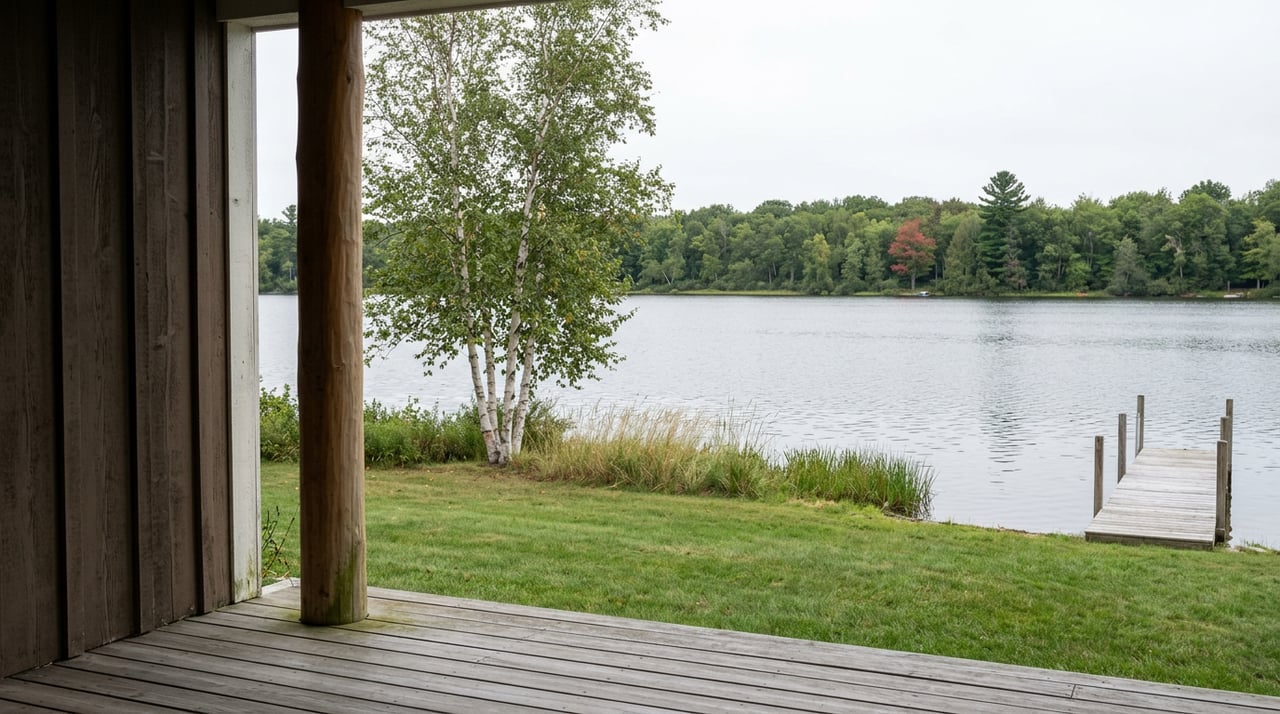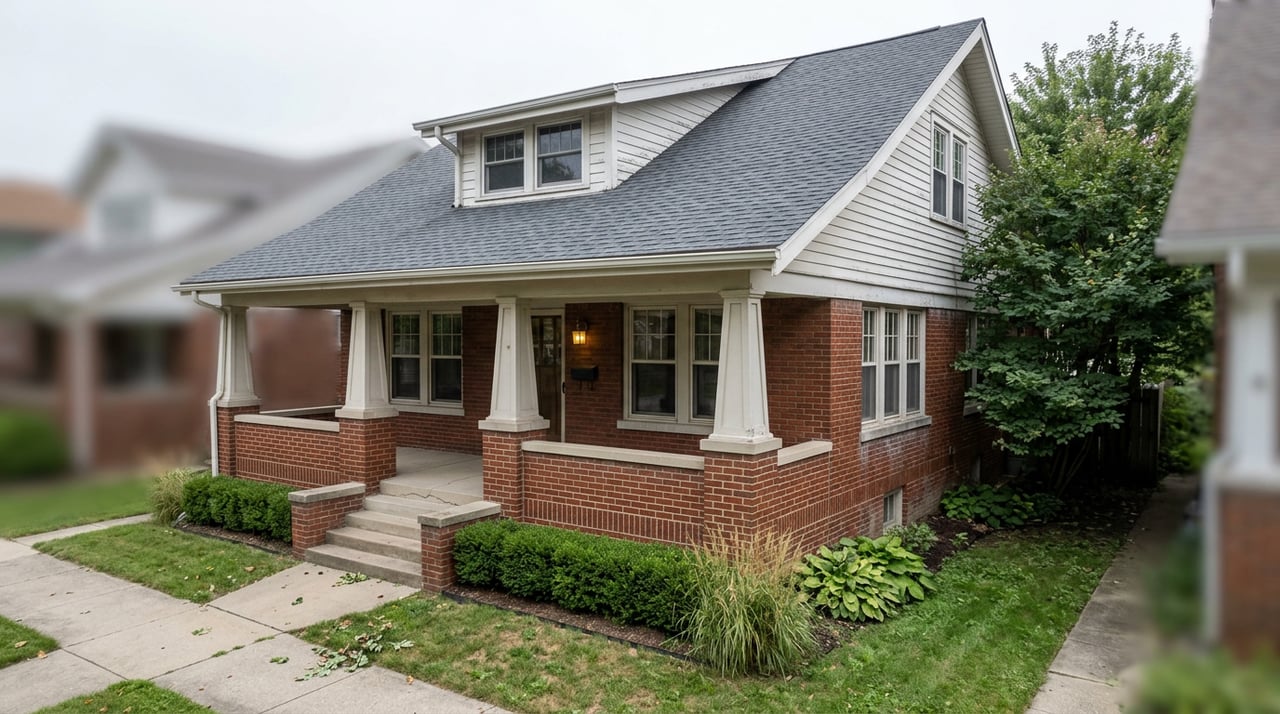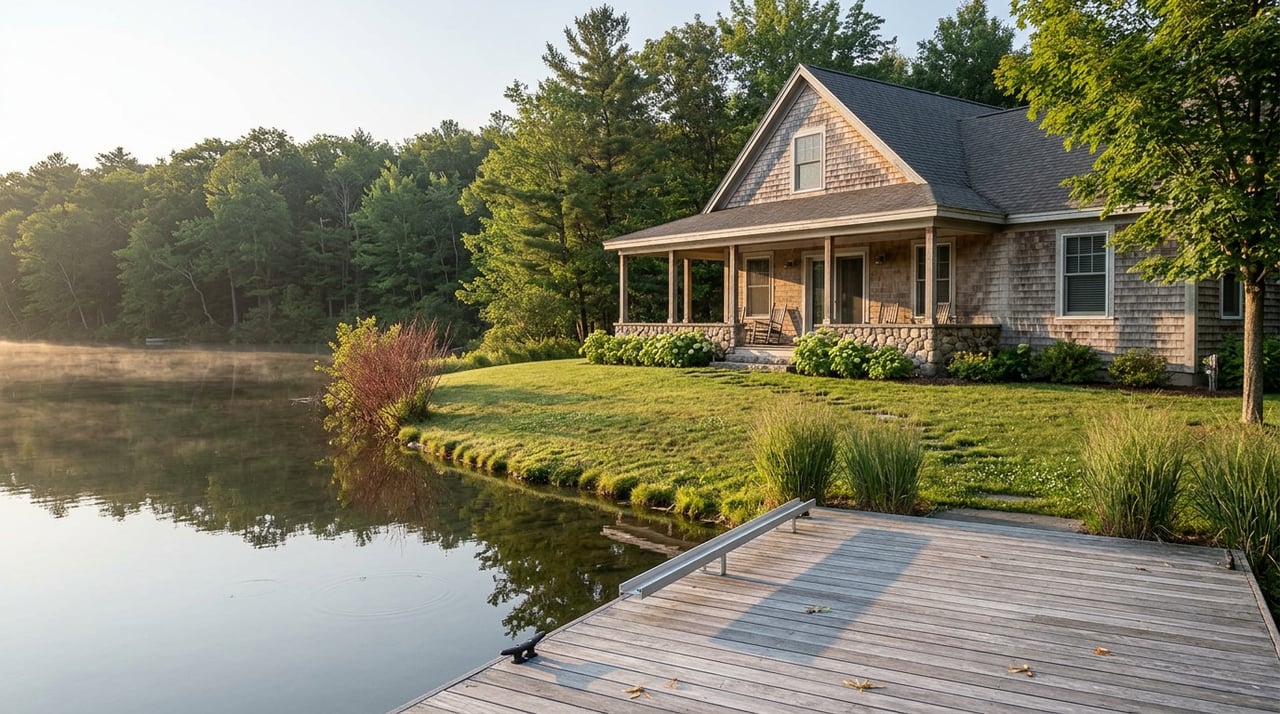
Two listings land in the same saved search. Both say Waupaca Chain O'Lakes. Both list frontage in the same range, both show a pier and a pontoon in the hero photo, both sit within a five-minute drive of the same grocery store. The prices are close enough that a buyer starts treating them as interchangeable, a coin flip between finishes and floor plans.
They are not the same purchase. One of those lakes lets you tow a wakeboarder behind a boat with the throttle open. The other is legally a no-wake lake, and depending on which of the 22 connected lakes it is, you might only be able to reach it by canoe. Neither fact shows up in the listing description. Both show up the first time you try to use the water the way the marketing photos implied you could.
The Chain Is Twenty-Two Different Products Wearing One Name
The Waupaca Chain O'Lakes is marketed as a single destination, and geographically it is: 22 spring-fed lakes connected by narrow channels, all draining eventually into the Crystal River. But the Chain splits into a Lower Chain and an Upper Chain, and the split matters more to a buyer than the shared brochure name suggests.
The Lower Chain includes the lakes most people picture when they hear "Waupaca lake house," among them Rainbow, Round, Long, Columbia, Taylor, Dake, McCrossen, and a dozen more. Of that group, only four carry full recreational boating rights: Rainbow, Round, Long, and Columbia are the Chain's designated lakes for water skiing, wakeboarding, and tubing. Every other lake on the Lower Chain runs slow, no-wake.
The Upper Chain is a different product entirely. Its five lakes (Lake Orlando, Knight, Manomin, Pope, and Marl) sit upstream along Beasley Creek and are reachable only by kayak or canoe. There is no motorized boat access. A parcel on the Upper Chain is a paddling and fishing retreat, full stop, regardless of how the listing photos frame it.
So before frontage footage, before finishes, before any of the variables a buyer normally compares, the first question a Chain listing should answer is which of these three categories it falls into: full recreational boating, no-wake only, or paddle-access only.
| Lake type | Examples | What you can legally do |
|---|---|---|
| Fast lakes (Lower Chain) | Rainbow, Round, Long, Columbia | Water skiing, wakeboarding, tubing, motorized boating |
| No-wake lakes (Lower Chain) | Dake, McCrossen, Taylor, Sunset | Slow-speed motorized boating, fishing, paddling |
| Upper Chain | Lake Orlando, Knight, Manomin, Pope, Marl | Canoe or kayak access only, via Beasley Creek |
The Wake Fight That Redrew the Map Again
Here is where it gets more complicated for anyone shopping the four fast lakes specifically. Even full boating rights on Rainbow, Round, Long, or Columbia now come with a caveat that didn't exist two years ago.
The fight started with wake surfing, the practice of using ballast tanks and wake-enhancing devices to build a rideable wave behind a boat. In November 2023, a group of wake-surfing advocates sued members of the Waupaca Chain O'Lakes Protection and Rehabilitation District and its citizen advisory committee over a recommendation to restrict the activity. The Town of Farmington moved ahead anyway, passing a 2-1 vote on January 15, 2024, banning wake-enhanced boating on Rainbow and Round Lakes, the two lakes that sit entirely within its jurisdiction.
That didn't settle anything. Opponents hired an attorney, threatened further legal action, and packed a March 2024 public hearing where residents on both sides made their case, some describing the wakes as a safety hazard for docks, canoes, and swimmers and others arguing the ban went further than necessary. By April 2024, the town board flipped its own vote 2-1 and repealed the ban.
Three months later, a joint board representing both Farmington and Dayton passed a broader version covering six lakes instead of two: Rainbow, Round, Columbia, Long, Stratton, and Spencer. Unlike the first attempt, this one went through in about five minutes and passed unanimously. "We have to protect the lakes, they're too small," Dayton resident Casey Plunkett told a local news crew after the vote.
The current ordinance, which the Waupaca Chain O'Lakes Association still lists as active, prohibits water sacks, ballast tanks, submersible wings, and any device used to make a boat run artificially bow-high to enhance its wake. Traditional water skiing, tubing, and normal acceleration into planing speed are explicitly excluded, so the ban targets wake surfing specifically, not boating in general. Fines run $500 for a first offense and $1,000 for a second within a year.
Two things stand out for a buyer. First, the ordinance now covers Stratton and Spencer Lakes too, neither of which was ever on the traditional list of four fast lakes for skiing and wakeboarding. The wake-surfing debate spread beyond the lakes it started on. Second, this rule has already been passed, repealed, and re-passed in a broader form within about six months. A buyer relying on a listing agent's summary from 2024, or an older blog post describing the ban on just two lakes, may be working from a version of the rule that no longer applies to the parcel they're considering.
What This Does to the Price Tag
Waterfront pricing on and around the Chain spans a wide range, and the spread tracks the lake distinctions above more than it tracks square footage.
Zoom out to Waupaca County as a whole and the picture is broad: as of July 7, 2026, there were 51 active lake property listings countywide, averaging $696,112, with the highest priced at $2,289,000 and the lowest at $15,000. Narrow that search to Waupaca itself and the average climbs to $1,183,650 across 24 active listings as of July 5, 2026, topping out near $5 million and bottoming out around $126,000. Narrow it again to listings specifically tagged as Chain O'Lakes waterfront, and only seven were active at last check, carrying a median asking price near $1.49 million and typically sitting on the market around 116 days.
That last number is more than double the countywide lake average, and it isn't because Chain homes are twice the size. It's because the narrowest search pulls disproportionately from the four named fast lakes, where boating rights (even with the current wake-surfing restriction) carry a premium that quieter no-wake lakes and canoe-only Upper Chain parcels don't command.
The current inventory illustrates the split. A new-construction home on Taylor Lake, a no-wake lake, stood out this year as the only newly built home on the Chain, with completion set for the end of August 2026. A renovated retreat on McCrossen Lake, also no-wake, emphasizes sand frontage and quiet views. Contrast that with a condo in the Ravenswood association on Round Lake, one of the six lakes under the current wake ordinance, where 18 units share 1,200 feet of shoreline along with a deeded boat slip, tennis and pickleball courts, and HOA-covered exterior maintenance. Same Chain, same general price bracket in some cases, entirely different recreational product and cost structure.
What to Ask Before You Write an Offer
A few questions cut through the ambiguity faster than any listing description will:
- Which town does this specific parcel sit in? The enhanced wake ordinance is a town-level rule (currently Farmington and Dayton), not a blanket Chain-wide policy, so the same lake can have different enforcement depending on which shoreline you're standing on.
- Is this lake one of the four traditionally full-boating lakes, a no-wake lake, or Upper Chain paddle-access only? That single fact sets your baseline for what's allowed before any ordinance is even considered.
- If it's Rainbow, Round, Columbia, Long, Stratton, or Spencer, what is the current, confirmed status of the enhanced wake ordinance? Given the reversals of the last two years, get this in writing rather than relying on a general reputation for the lake.
- What lake district or association dues apply, and what do they cover? Shoreline maintenance, buoys, and water quality monitoring on the Chain typically run through the Waupaca Chain O'Lakes Protection and Rehabilitation District, and costs vary by lake.
A Couple of Things Buyers Ask Us Directly
Does the ordinance ban boating outright on those six lakes? No. It targets artificial wake enhancement specifically, meaning ballast tanks, water sacks, and devices that force a boat into a bow-high stance to build a bigger wave. Standard water skiing, tubing, and normal boat operation remain legal on Rainbow, Round, Columbia, Long, Stratton, and Spencer.
Could this rule change again before I close? It's happened twice already since early 2024, so treat any secondhand summary, including this one, as a starting point rather than a final answer. Confirm current status directly with the relevant town before you're deep into a contract, especially if wake sports are the reason you're buying on one of these specific lakes.
Buying on the Chain isn't a matter of finding good frontage and a fair price. It's a matter of matching the lake's actual use rules to the reason you want to be there, and getting the current version of those rules in writing rather than assuming the lake's reputation still holds. That's the kind of local detail worth having someone in your corner for before you make an offer.
If you're comparing lakes on the Chain, or anywhere else across Wisconsin or the Chicago area, the Phair-Hinton Group can walk you through what a specific parcel actually allows before you write an offer on it. Let's get you home, schedule a call to get started.